The Lycée Times Newsfeed


Showing posts with label Primary School. Show all posts

Sunday, June 12, 2011

Religion lessons must be open

Plans to introduce religious education into school drew a strong response from Connexion readers with many applauding the chance to show aspects of different religions.

Former Anglican priest Richard Hughes spoke of the two mutually exclusive roles that he held as both priest and, later, as a teacher of religious education. He said: "The role of the church is to convince. The role of the school is to educate. From a non-religious perspective, anybody seeing a painting of the Madonna and child or a photograph of the Dome of the Rock should know something of its provenance. "I ended up writing series of schools' textbooks for Oxford University Press, used and accepted widely but controversial among the people who wished to promote a particular religious perspective […] But the lessons were not designed to tell people what to believe. Their purpose was to promote lively classroom discussion."

Terry Westroby feared children could become confused with discussion of the wide range of religions and felt that French children would know of their Christian heritage and that would lead their studies. He added: "The Christian understanding is of a relationship with God. Religion can get in the way! But overall I think that to have some facts to start with is a good thing. The Bible stands up to honest study." Not for Christopher Thompson who said: "Religious education with its blatant disregard for, and denial of, scientific knowledge and its perpetuation of outdated mythology has no place in the state education of children, either in France nor anywhere else. "It is quite unbelievable that in the 21st century children should be taught these unscientific fairy tales, but if this nonsense must be perpetuated let it be outside the state system."

Kathleen Fourches in the Corrèze highlighted that we mentioned only Bible stories in our newsletter article and added that if there was to be any teaching, it would have to "englobe not only the Jewish religion and Christianity but also Islam, Buddhism, Shintoism and why not animism, not to mention all the other religions ancient or modern. Nothing stops parents giving their offspring the religious education they choose; that is why there is free time on Wednesdays."

Cathy Shore in Maine-et-Loire remembered with pleasure the old parables (the Good Samaritan etc.) and saw them as interesting tales or stories with a moral "which I don't think is a bad thing at all". She went to a Church of England school which had chapel every day and said: "It didn't make me more religious but I did take pleasure from the communal aspect of  'chapel'."

Roger Cope, a 68 year old agnostic in Saone et Loire, thinks France does not know how lucky it is to have an education system where religion is not taught and compared religions to computer viruses for the way they can mess up people's lives.

Article from The Connexion

Sunday, April 10, 2011

Leave timetable alone, says poll

Most people who took part in an internet debate on possible changes to school timetabling want things to stay as they are.

While key topics such as shortening the summer holidays (balanced by lengthening other ones) or axing the four-day week generated opinions for and against, a majority opposed change. Five thousand took part in the consultation organised by Education Minister Luc Chatel, of whom 49 per cent were parents of pupils, 22 per cent were teachers and 11 worked in education in other capacities.

The length of the summer holidays was the topic that drew the most interest (2,000 comments collected); however, only 46 per cent thought they should be reduced. Those in favour said some children forget what they have learnt over the summer and that the All Saints and Christmas holidays were too short in comparison. However, arguments against shortening included problems with attending school in hot weather or the fact that the current arrangements fit with business closures in July or August and immigrant families take advantage of the long break to visit relatives abroad. Only 33 per cent of people taking part wanted to change the controversial four-day primary school week (brought in two years ago), which has been criticised as tiring by some parents’ and teachers’ bodies, the national Academy of Medicine and a recent parliamentary report. Those in favour of five days thought the current arrangement compressed the lessons into too short a period (with both overly long days and excessive breaks from work), and did not “respect the children’s natural rhythms”; others thought it benefitted them to rest on Wednesdays.

Some opponents said the four-day week suited families who could afford to provide a range of activities for their children, while in poorer families they often spend their time off in front of the television; five days is therefore better overall, according to this view.

Another topic creating discussion was homework, with 45 per cent saying children’s personal work should be integrated into the school day at primary school. Many people said there was too much homework, tiring children unnecessarily, and that it is a burden on parents, who end up having to help. A majority felt homework should remain, though some said there should be less handed out. “There should be a reasonable amount, not too much,” said one mother, who added the amounts given at present “affect family life”. Some respondents felt the four-day week had resulted in teachers giving more homework to compensate for the shorter week. While the government will continue to consider timetabling this year, another priority will be violence and harassment in schools. An inquiry into the problem is being launched next month, to be repeated every two years. Seventy per cent of heads of the 184 schools identified as having the worst problems have now had special training, and the rest are to receive it during the first few months of this year. By the end of the year, all trainee teachers will be given new training in class management.

Article from www.connexionfrance.com

Here’s how it’s working out in America. Although the aim isn’t to save money, the basic concept remains the same.

Sunday, April 3, 2011

Revolt stirs in France's schools against 'elitist' education system

The French government is experimenting with introducing more cultural activities in schools and has reformed the grading system in primaries. Photograph: Alamy

Classrooms experiment with catering for diverse needs of pupils in move away from marks-based system

It's hard to believe, when lessons are under way, that there are 700 children at Lou Redounet high school in Uzés, southern France. The corridors are silent; not a single pupil is out of place.

But behind the classroom doors a series of revolutionary experiments is under way. Children falling behind in maths, French and English are being taken aside for extra tutoring. In a few classes the tough marking system that dominates French schools has been quietly dropped. Teachers are encouraged to treat every pupil as an individual. By British standards these changes seem uncontroversial, but in France they are deemed so radical that they have already cost one headteacher his job.

In one class, 11-year-olds are asked to come up with verbs to describe what they have just read in The Odyssey. Twenty-nine hands shoot up in the air vying for the teachers' attention, every pupil in the room clamouring to take part in the debate.

Abdul Berthelot, an English teacher who is working on the experiments, says: "We have changed the marks to focus more on skills and knowledge, and not just knowledge. There is less pressure. It means the children are confident and enjoy the class. You won't see this level of engagement in many other classes. It ends the psychological dependency these children have on marks.

"This is a little revolution. Our system is elitist. Marking is everything. It used to be that at the end of each year the kids were ranked in each subject. That doesn't happen any more but we still have that spirit."

Paul Robert, the headteacher, describes the experiments as "tiny and shy" in the face of fierce opposition to change from the education authorities and some staff. He was forced out of his last job after a backlash. There, his ambition had been to reduce grade repetition – children being held back a year – by giving them individualised lessons.

Robert says the system conspires against change; because teachers are employed by the state rather than the school, they are more concerned with inspectors' opinions than those of headteachers. Meanwhile, the unions resist reform and the government provides no consistent strategy. He describes the French education system as a "huge prehistoric animal unable to walk due to its own weight".

There are several things that typify the French education system. First, it is intensely academic, driven by a grading system that marks out of 20 and rules with an iron fist. Children repeat years if they fall behind and have among the longest school days in Europe. Second, most teachers consider themselves to be academic instructors rather than educators in the wider sense. From an early age lessons look more like university lectures than nurturing learning environments. Thirdly, it is incredibly uniform. Enter a grade-one science class in any part of the country, and you will see a very similar lesson. Variation is fiercely frowned upon.

But many now believe this system is no longer working. France is rapidly falling behind in international league tables. The last major international study, by the OECD last year, found the performance of the lowest-achieving students in France had declined steeply, while the performance of the highest-achieving students remained the same. Boys in particular are seeing their grades fall.

For the British government, which in England is championing a more traditional curriculum with a French-style baccalaureate, it's worth asking why.

Eunice Mangado-Lunetta, director of Afev, the Association of the Student Foundation for the City, which works with children in the poorest areas, providing mentors to support them through school, says the problem is that an academically based, uniform system is struggling to cater for a diverse population, leaving those from the most troubled areas behind. "Our system is historically very elitist. Now we need a system that caters for all children – especially the children in more disadvantaged areas."

The organisation holds an annual event, journée du refus de l'échec scolaire – the day of refusal of school failure – when they publish the results of a survey that shows the damaging effects of the system.

"Kids from an early age of school are convinced they are not going to succeed. They think highly of their teachers, but they think it's their fault that they fail. They feel guilt and failure," she says. "We tend to confuse effort and suffering. We think harsh school is normal but we think that it's OK to be harsh."

France's decline in the international rankings has focused minds. A book by the Paris-based British academic Peter Gumbel published last year titled On achève bien les écoliers? (They shoot schoolchildren, don't they?) sharpened attention further. In it he argued that the education system was systematically undermining children's confidence.

"By every international comparison kids here have a low level of self-confidence and lack of self-esteem and fear of failure and no fun at school," he says. "Even people who have done well have a nasty butterfly feeling in their stomach when they think of school."

A disconnect between the traditional academic education system and the diverse needs of the pupils it caters for is increasingly recognised. The grading system has been reformed in primary schools to make it more diagnostic than a simple mark out of 20, although many teachers have continued the old system anyway. The government is experimenting with introducing more arts and cultural activities in schools. There are moves to give headteachers more freedom over the curriculum.

Luc Chatel, the education minister, has also acknowledged that the long schools days are outdated, saying schools "are still revolving around late 19th century lifestyles which are no longer relevant".

But in France, as in England, education is tightly bound to political ideologies that can hamper change. The right argues the answer is more academic rigour, while the left says the system needs to be changed to cater for young people's needs and skills. This is counter-interpreted as a move to "dumb down". Some headteachers argue this leaves no room for policy-making based on evidence. Others say the problem of trying to change the education system runs to the heart of French culture.

Sitting in the wood-panelled offices of the director of one of France's most elite universities might be the last place you might expect to have every stereotype about the snobbery of the French openly aired and confirmed. But Richard Descoings, the softly spoken director of Sciences Po, the institute for political studies in Paris, says: "In France it's like if you don't belong to a certain part of the population you are considered not as clever or hard-working. This is not true. It is unjust."

Obituaries in Le Monde habitually include the deceased's success in university entrance exams as a mark of their status. "It's crazy, your ability at 18 is not a mark of your life's work," he says. "It's not that we have a bad system; it's a system that is dated. Historically dated and sociologically marked."

Descoings' institution has adapted the admissions system to actively recruit and give extra grants to pupils from poorer homes. He thinks the single thing that could make a difference is improving teacher training. 'We need to tell them that their job is not only to teach but to educate; In France we don't make a difference between teaching and learning. We use the same verb "apprendre". They need to become educators in the widest possible sense."

Back in Uzés, Robert is trying to tackle this problem on the ground. "I try to encourage teachers to take a wider role. The foundation of the teacher is exclusively academic. But children's needs have radically changed. So we have an evolution of pupils' needs and the job of teacher has not changed," he says.

Patrick Gonthier, secretary general of the Unsa education union, admits some teachers are resistant to change, but says this is partly because education has become so politicised that changes are rarely effective or sustained.

He cites a particular example. Last year the government scrapped teacher training colleges, themselves an experiment by a previous government, meaning that in September teachers started work with no training, only an academic background and a mentor to oversee them. Because many new teachers are sent first to the most difficult schools, this is entrenching problems with a new generation of untrained teachers, he says.

Some 70,000 teaching posts have also vanished under the government's policy of not replacing one out of two civil servants in an effort to cut costs. French teachers have adopted a British term for the stress they are experiencing: "burn-out".

Gonthier says the crisis is mounting and that France must acknowledge its republican, one-size-fits-all system is no longer appropriate for all children. "French education is not failing, but it is approaching failure. It is very difficult for the French to accept that the republican system is inefficient to compensate for the difficulty of people's background. We live on the ideal that the public system is here to open the opportunities for you. It's not living up to that ideal."

Article from The Guardian

Sunday, March 27, 2011

Organize a minute of silence in your school for the Japan disaster

Dear Readers,

As there is probably no need to point out, Japan was hit by it’s worst disaster since 1945, earlier this month. Thousands upon thousands of people have lost everything they own. Many have only the clothes on their backs. Hundreds of thousands whose homes were destroyed still have no power, no hot meals and in many cases have not showered in two weeks. Latest official figures show that over 10,000 people have died, over 17,000 people are missing and thousands more are injured as a result of the earthquake and tsunami. However, Japan also faces a different kind of threat. As you probably know, the Fukushima Dai-ichi nuclear power plant overheated and huge explosions were seen as the hydrogen that had built up inside combusted. This was because the fuel tanks and other equipment for the back-up generators that were in place to keep the water circulation moving, were washed away in the tsunami after the earthquake. Japan is now praying for a miracle as a massive nuclear disaster and the menace of a nuclear meltdown looms.

The Official Lycée Times Japan Disaster logoSo, The Lycée Times has decided to encourage the students of France to organize a minute of silence in their schools. Whether it’s a primary school or a university, just one class or the whole school, you would be showing your support for the thousands of emergency service staff and relief workers, as well as the victims of this terrible disaster.

If you’re planning on making it a school event, you can download a ready-made promotion poster here, to post around your school. Although please make sure you have permission from the schools principal before doing so. You can hold your minute of silence on whatever day you like (you just need to fill in the blanks on the poster) and if it’s just for your class, you only need the permission of the teacher you have at the time.

If you want to take it further and do a sponsored silence or just make a donation, visit the official Croix Rouge Française website at www.croix-rouge.fr or go directly to the donation page at www.bit.ly/CRF-Japon.

If you are going to organize this event in your school, or have organized it, we would love to know how it went and how many took part. Send us a quick email at thelyceetimes@gmail.com. If you include the name of your school, we’ll add it to the Japan Disaster page of our website. If your feeling sceptical about how many people would be willing to take part, don’t be. Even if no-one has been talking about it, they know about it and the chances are they want to do something about it! You’d be surprised!

Good luck do-gooders!

The Editor

Sunday, March 13, 2011

Starting school in France

Dear Readers,

Deciding to move to France with children can be a hard decision to make. Will they find it too hard? Will they be able to keep up in school? Will they struggle to make friends? In this article, we’ll try help you make that decision wisely.

1. Getting into a French school

To get into a collège or lycée in France, you can do it through an exam. This exam tests your abilities in maths and French. You can easily pass this exam and get into the class you want to get into. The aim of it is to be able to give your future school an idea of what kind of student you are, and how you are in maths and French. The French test might be a few lines of translation or some questions on a document. This exam determines what class you’ll go into. Not all schools will want this done, so it’s better to arrange an appointment with the school and meet the principle to talk about it. The exam option isn’t worth doing unless the school require it. In any case, the school will arrange the exam for you, so you could find it hard to organise it when you have no official papers from the school to say they’re interested.

If your school doesn’t want you to pass an exam, they’ll probably still want to see your results from the previous school. In any case, make sure that from the first meeting onwards, you have your latest school report from your current school, some form of ID could be useful (passport, driving licence…), you may want to ask your current school’s principal for your records etc. as this may be asked for. With this paperwork, you should be ready for your first meeting with the French school’s principal.

2. Which is best? ‘Privé’, ‘public’ or international school?

If you are unsure whether public or privé is better, click here to read our article which explains the two and compares one to the other.

For the list of more common, everyday schools, funded by the government, click here.

Here is a directory of private international schools in France: link on www.frenchentree.com.

In addition to the International Schools listed in the directory you may also be interested to learn about the international sections within certain French lycées. There are 12 British sections and 7 American. In addition to teaching the French curriculum students are also taught to A level standard in English. This allows successful students to go on to study for the ‘Option Internationale Baccalaureate’ (not the same thing as the International Baccalaureate). A full list of these lycées can be found on the official government CIEP site (Centre International d'Etudes Pédagogiques). Here are the direct links to lists of the international schools in France: Primaire (Primary); Collège (Secondary); Lycée (College).

3. How will my children get on in a French school?

The answer to this question varies quite a lot and it really depends on how willing they are to integrate. New foreign students have to make big efforts (especially in their first year), to be accepted by the native students as ‘willing’ and also to learn the language. It’s all too easy to just stay in a group of English-speaking students and if you do this, you’ll be at a massive disadvantage later down the line, moving on to lycée or university with a level of French that could have been better had you spoken to more French students.

Some schools participate in the FLE (Français Langue Etrangère) program. This is basically French classes for English-speaking students during school hours, in the school. However, if you have GCSE level French, you may not benefit from it a lot, but it’s definitely worth going to. The more French you can listen to and speak, the better you’ll get on.

You’ll have to bear in mind that there’s always that minority that will reject a foreigner at first sight, no matter what your level of French is. This is experienced by anyone, of any age, moving to any foreign country (Britain included). It’s an unavoidable situation and you’ll have to learn to cope with it. Showing you’re willing to learn the language and try to speak it can help you to be accepted by the majority of these people. You just need to prove their prejudices wrong.

Article by The Editor

Sunday, January 30, 2011

Class equivalents in French Lycée and Collège

Dear Readers,

Many ex-pats move over to France every year with their families. Getting their children into the right school year is one very important thing every family has to do. So, in this article, we’ll be taking a look at how the French education system is organised.

The French education system diagram

Click image to see in better quality

As you can see in the diagram, students go into 6ème at the age of 11, straight after primary school. They are now in collège (also known as the ‘premier cycle’). They will go through 5ème and 4ème before going into 3ème where they’ll pass the brevet at the end of the year. Their year average in 3ème will decide whether or not they’ll go through to lycée. The brevet doesn’t decide whether a student passes through to lycée, the decision is already made around 3 weeks before the student even enters the exam hall. To read more about collège and its subjects, click here.

After collège, lycée is reached and the student will have to decide whether they’ll take a lycée professionel course or go for the lycée général et technologique which is chosen by the vast majority of students. After the first year of lycée, 2nde, the student passes into 1ère. Some BAC exams are done in this school year but it depends on what the student has picked (S, ES, L, STG…). It is recommended to keep an eye on Onisep.fr for further changes to the lycée curriculum and exams. You can read more about lycée if you click here and learn about the lycée reform and its consequences by clicking here.

Article by The Editor

Sunday, January 16, 2011

Parents call for boycott of tests

Dear Readers,

The largest parents’ federation is calling for a boycott on tests to be held in the last year of primary school (CM2) next week.

A teacher writing on a blackboard.The FCPE says the start-of-year tests for the CM2 classes, launched three years ago, are a “profound mistake”. A spokesman said: “It is not acceptable for children to be evaluated on things they have not been taught yet.” They are asking their members to write to schools saying they refuse to have their children’s results passed to the government.
The tests are to evaluate children’s level in French grammar, spelling and basic maths such as decimals or mental arithmetic. However FCPE believes it is inappropriate for the children to be tested at this early date before they have properly understood the new topics they have started this school year.

The leader of teachers’ union SE-Unsa, Christian Chevalier, said that the government held a consultation on the issue several months ago, but had not taken the union’s views into account. He said: “There should either be a test in September to work out where the gaps are in the children’s knowledge, or one in June, which would be a real evaluation of what they have learnt.”

BESANCON, FRANCE - DECEMBER 13:  Luc Chatel, E...Education Minister Luc Chatel said there was no question of not holding the tests. “Our system needs evaluations so as to allow each teacher to check on the progress made and pick up on weaknesses of certain children. It is also a performance indicator for our educational system, and over the long term shows us how things are evolving, so we can make adjustments.” He insisted the January date is suitable because it allows teachers to see how things are progressing, while leaving enough time to arrange extra support for children who need a boost before they move on to secondary school. He had listened to the teachers’ views, he said, and, for example, had made changes to the grading of the tests. “They are a more subtle tool now,” he said.

Article from The Connexion

Sunday, December 5, 2010

“My son's experience in a French school was not a good one”

The following article is borrowed with thanks from www.theguardian.co.uk.

As a new book lays bare the inadequacies of the French education system, Emily Barr relives her own disastrous experience of trying to settle her son into a French primary school: 'I felt sick with recognition'

Emily Barr with her family. Photograph: Guardian

In his first year at his new primary school in Cornwall, my son Gabe gave a talk to the class about his experience the previous year at school in France. "The teacher shouted all the time," he informed his fellow pupils. "She wrote a 'naughty list' on the board. She waved a bamboo stick around. And the reading book was really boring." To emphasise his point, he ripped up a picture he had printed from the offending book and threw it into the air, concluding: "I like English school."

Seven years ago, James and I were thirtysomething backpackers with two small children, not quite ready to stop the adventures. We moved to France because, as a Tefl teacher and a writer, we could, uprooting a two-year-old and a tiny baby and taking them to live near Europe's best surf. We bought the regulation crumbling house and did it up. We spoke French, went to village functions and drove to the beach every weekend. When Gabe turned three, we sent him to the maternelle (nursery) section of the village school, where he settled happily and became bilingual. Many of our friends in Brighton were mired in panic about getting their children into the right schools, whereas everyone knew that the French education system was among the best in the world. It was academically rigorous, dependable, secular. We may have been slightly smug.

But five years later we returned to the UK, desperate to get our children into a good primary, to send them somewhere without a "get it right or you're rubbish" ethos. By that point, I only wanted Gabe to go to a school at which someone would notice or care whether the children were happy or not.

When I read the interviews that the journalist Peter Gumbel has given to promote his new book, On Achève Bien Les Ecoliers (They Shoot Schoolchildren, Don't They?), published this week in France, I felt sick with recognition. Gumbel is a journalist and lecturer at the elite Institut d'Etudes Politiques (better known as Sciences Po) in Paris, and he has two daughters in the French education system. His book lays bare the system's inadequacies. "French children . . . are more anxious and intimidated in school than their peers in Europe or other developed countries," he writes. "They're so terrified by the idea of making mistakes and being lambasted for them, that they'd rather keep their mouths shut than put their hands up." He found his children and his students stressed, ill and massively lacking in confidence.

I remembered the seven-year-old girl who was so scared of not progressing to the next class that she stopped eating. The 10-year-old who was put up a year because she was bright, and found herself in the first year of secondary school in a class with 14-year-old boys who had been kept back repeatedly and who were frustrated and aggressive.

However, this reality did not hit us for several years. Pre-school provision in France is second to none, and we managed to carry on being smug while Gabe, and his little brother, were happy at maternelle. The younger ones would spend much of the afternoon napping on camp beds. Lunch was a three-course meal, and the children danced, painted and played all day long, learned to write their names on squared paper and to count, but with very little pressure.

We moved to a different village an hour's drive away, for James's work, just as Gabe reached six. When we went to visit the new school, the head showed us around, on a day when no children were present. He seemed to be an "Etre et Avoir" kind of superman, running the school, teaching the last year of primary, and also – did he mention? – he was mayor of the village. Alarm bells should have rung, but I ignored them because I wanted it all to be wonderful.

When the new school year started, it did not take long for it all to fall catastrophically apart. Gabe's class teacher, whom we liked, left three days into the school year. She was replaced by a young supply teacher whose heart was not in the job and who had no idea how to teach.

On his first day, Gabe clung to me. On his second day, he clung harder. I waited for him to settle, but it got worse. He cast around for reasons not to go. He invented headaches, stomach ailments. I sometimes let him stay at home, but often sent him in because I had to work. Once or twice I peeled his arms off me and flung him at the teacher. Although he made friends quickly, and his teacher assured me he was doing well, it was heartbreaking, and I look back on this period now and feel I failed him.

School in France has no assembly, no school plays, no music, no clubs. There is a hastily thrown-together entertainment at Christmas. There is no pastoral care. Children go through the system and emerge with a body of knowledge, and everything else is down to the parents.

In CP (cours primaire, aged six), Gabe and his class sat at individual desks, copying handwriting from the board and taking dictation. They learned by rote, and every child in the class would read the same two pages of the reading book on the same day. Some would be bored and frustrated because it was too easy, others stressed because they didn't understand it. The teacher came down harshly on anyone who did not get to grips with the subject, or did not behave acceptably: there was always a "naughty list" on the board, never a "good list".

Victoria, an English woman with a French husband and two children, lives in north-east France, where her eldest child is at a bilingual secondary school. Her daughter "sees huge differences between her native English-speaking teachers, trained in the UK or US, and her 'normal' French teachers," says Victoria. "The former engage with the class, teach creatively, encourage discussion and mark positively, whereas the latter (with exceptions) tend to lecture rather than teach, and mark with terrifying harshness and negativity." Victoria's daughter cannot bring herself to ask if she does not understand something. "In the past we have encouraged her to speak up in class when she hasn't understood," she says, "but other pupils have been greeted with frosty sarcasm by some teachers and the ridicule of classmates, so she won't do it."

We had known for a long time that we were not going to stay in France for ever, but Gabe's unhappiness propelled us home sooner than we anticipated. Gabe and I came to Cornwall to look at schools. When we stepped into St Francis, his current school, his face lit up. The head showed us around, and I watched Gabe's eyes widen as he looked at the PE equipment, the art room, the playing field. Best of all, he plucked up the courage to tell her that he wanted to be a time lord when he grew up, and she said, "Oh good – can I be your assistant?" This is a school that has an overwhelming pastoral ethos, and is not all about the grades. It has a community choir and a vegetable garden. The school production of Alice in Wonderland was rehearsed to such a high standard that many of the children were performing like professionals. Gabe is happy, and there are no "boring" reading books.

That is not to say, of course, that the British system is perfect. There are good schools, and bad schools, and they are driven by the personality of the head. The unseemly scramble for places at desirable establishments would horrify French observers, and rightly so. As would the pretence at religion that goes on.

Dean Dorrell, a British man with a German wife and three French-educated children, also points out that, "One of the great advantages of the French system is the fact that there are basically no private schools. There is no 'them and us' attitude enforced from a young age, which I believe is endemic in the UK education system and translates into the class system that is still quite evident in UK society."

Now, if French schools could become less rigid, and if British schools could be more consistent, then we might all be on to something.


Article from The Guardian (www.theguardian.co.uk)

Sunday, November 28, 2010

Moving to France - for families (From French Property News)

Dear Readers,

The Editor’s note:

The following article was first published in French Property News and has been reproduced here with all permissions from the author. This article should be regarded as a guideline only because it has not been updated since 2005. We cannot, therefore, guarantee that the information it contains is either accurate or current but a lot of it is still useful. Do not make any decisions without consulting the other articles on this blog. The following article is copyright of  the author where stated, or copyrighted to The Lycée Times under the Creative Commons licensing system where no author is named. This article may be printed for personal reference, but may not be published, copied or re-used for any other purpose without seeking permission from the author, Sue Elliot.

The Editor

The average age of couples moving to France is dropping rapidly - there are now far more '30-somethings' or '40-somethings' taking the plunge and moving lock stock and children/dogs/cats over to France than there used to be. Ten years ago the average age was probably 55, now it seems to be about 45 and dropping. Many of these families have young children or teenagers and the first question that is asked nowadays is not 'how far is the nearest bar?' but 'how far is the property from schools and what do those schools offer?'


If we take the first part of the question i.e. distance from school to home - in principle this does not pose a problem, as rural areas always provide coaches to pick up the children in out of the way places and get them into school on time. However you could find that you live a considerable distance from the village where the school is situated - this does not necessarily mean the nearest village to you as many villages will combine facilities if they do not have many children in each commune and so the 'maternelle' may be in one village and the 'primaire' in one much further away. This keeps the village schools alive but can mean long journeys. Thus you do need to find out at what time the bus would pass your door or the end of your lane - if this is 7.30 am in order to get the kids to school by 8.50 and then they do not get dropped back until, say, nearly 6.00pm then this could be too long a day for your little one and you might need to consider living closer so that they could either walk to school or only spend a short time on the bus at either end of the school day.
Up until 2 ½ or 3 there are often Crèches where for about 3 euros an hour (a lot less if you are on a low income) you can leave your child in capable hands - all staff are fully trained and registered. The alternative is a registered child minder who has to undergo regular training. However once your cherub has reached 3 then they are eligible to go into the State-run Maternelle establishments, known as TRES PETITE SECTION and MOYENNE SECTION where they can spend all or part of the day - they stay there until the age of 6 but from 5 onwards there is the Elementaire class where they start to learn to read and write.


From 6 onwards they graduate to the GRANDE SECTION and COURS PRIMAIRE FOLLOWED BY COURS ELEMENTAIRE 1 et 2 ET COURS MOYEN 1 et 2.


Attendance at a nationally recognised school is compulsory (prior to this the child can stay at home if that is the parents' preference) and they are put into the first year of the Ecole Primaire, called the CP class, at 7 they go into CE 1, at 8 it's the CE2, at 9 the CM1 and at 10 it's the CM2.


Children who are finding it difficult to cope with the lessons can do one year again and this is sometimes what happens when non-French children attend school for the first time - they retake one year but all efforts are made for all children of whatever nationality, to be in the right age group by the time they reach the age of 11.


Heading For The 'Big School'
For older children - 11 onwards - who go into 'Collège' (i.e. secondary school, please note that what we call College can in fact be several different entities in France, so beware of misusing the word and ending up having a very confusing conversation!) they may sometimes stay in the same building as the 'primaire' but normally they transfer to a separate establishment, much larger and made up of children from many surrounding villages. This is often in a different town so, once again, you need to consider the distance from this for the future.
Like lots of things in France they seem to have the reverse system to us! So at Collège they start in the 6th form (sixième) and do 4 years of general studies, finishing with the 3rd form (troisième) If in the 5th year the child is showing obvious learning difficulties then it is possible to redo a year or to reorientate the child to studies suited to his ability, but this is still quite a rare occurrence apparently.
Collège education is identical throughout France, following the same curriculum, however there is a slight difference recently with regard to the choice of which modern languages the child can study. You will receive a list of local Collèges and from this will see which schools offer, for example, German as a choice, some may offer Spanish and if you feel, when they are about to leave the 'école primaire' that you prefer your child to learn a particular language and this is in a Collège that they would not normally be attending, you need to make a 'demande de dérogation' i.e. ask that your child be admitted to a different Collège and for what reason. After this first year it is no longer possible to change.


16 Years Onwards
After Collège there is the choice of either attending a 'Lycée' - and this can be either général or professionel, the difference is the type of Baccalaureat (similar to A levels but a wider choice of subjects. If you chose the professional route it's because you want to specialise at an early age in something like the hotel trade, for example) or attending a CFA (Centre de Formation d'Apprentissage) which offers practical courses for people wishing to train as builders etc. In the Lycée or the CAF they do the 2nde (seconde) and then 1st (première) years of their education. So as you can see, when they would be in their Sixth Form in the UK they are in their First Year over here!! There is often then the Terminale (i.e. last year) for those who have not finished their Bac in 2 years.
On passing the Baccalaureat the choice is whether to go on to University, find a job, or undertake a further practical training course - and there are some young French taking to the idea of the 'year out' but this is still fairly rare over here.

After 18 - The Choices
University life is very different to that in the UK - on the mainland of Europe the tendency is to go to a university that is not too far from home, so weekends with the family are possible, washing can be taken home on a regular basis and the larder cupboard stocked up by doting parents. They do not have the 'let's get as far away from the aged parents as possible so we are free to do what we wish for as long as possible' mentality that seems to be the norm in the UK. Teenagers here seem to actually like going home, even midweek sometimes if classes allow. University accommodation is not easy to find but seems in general to be better quality than many of the houses which UK students have to rent for all but their first year at Uni. It seems, however, that lecture rooms are overcrowded and facilities limited and the social life is not what UK students are used to - some British parents actually leave their older teenage children staying with friends and family when moving out here as this reduces the disruption to their education at a 'difficult' age.
Courses can be 3 or more years and the French do tend to study for a lot longer so this is another consideration when you have older children.


The Alternatives To University
There is a desperate shortage of skilled labour in France just as there is in the UK - so if your offspring show signs of being 'practical' then they can take a skills-based training course with apprenticeship options, so as to become a plumber or central heating installer, or electrician, or builder, hairdresser etc. They should find work easily afterwards within an increasingly international community.


Fitting In
All choices depend on you, your children's ability to adapt and make new friends, their wish to explore new horizons and accept feeling slightly 'different' for a while. If one asks parents who have been out here for a while, most say that their children have definitely benefited from the move, have adapted amazingly well (better than their parents quite often!) are now bilingual and proud of it, and in fact many children say they would not wish to return to the UK as they feel safer here, there is less school violence, more discipline in class and they have easily made friends.
The consensus of opinion is that from about 11 onwards it is more difficult for children to adapt, however there are so many exceptions to this rule that I personally know of that it is up to you if you bear this in mind or not.
To cite a couple of examples, Clare Foster and her husband and daughter age 12 moved to the Dordogne from Australia where they had a dream house leading straight onto the beach and a lifestyle to match. However Clare missed Europe and they decided to come to France and buy a house with a gite to give them some income whilst they practised their French and decided how to earn a living. Their daughter's only knowledge of French was the very limited vocabulary she picked up from her Mother on the flight over and she started school with a certain trepidation - apparently the first evening they all sat round the dinner table laughing as she recalled a day that had been a complete mystery to her.
One year on and she is bilingual, has a host of friends, has adapted well to the lifestyle and been able to keep up her music classes, etc., and when asked how she felt about the move said “Oh I love it, I feel so much safer both at school and outside and I would hate to go back to Australia now” … two satisfied parents! They have now finished the gîte and have bookings for several months ahead and having redecorated the house they feel they need to move to somewhere bigger - their property is on the market if there is anyone out there feels they would like to take on an up-and-running 'home with income'.
Things are not always easy - one local family with two shy girls did have a few tears and tantrums whilst they were in the tiny village school, in spite of being given special French classes by the headmaster on a Saturday and being overwhelmingly happy with life on the farm and seeing more of their parents. When they started at the 'big school' they blossomed - they were more anonymous and able to blend in better and now are bilingual and very happy indeed.
However, the ultimate success story has to be the 18 year old who, after only 2 years, came top of his Lycée in French…… his parents still have problems with day to day basics and are totally stunned by his success. They have 4 teenage children, who all only had a basic knowledge when they came here 2 years ago and now have fitted in well, including the 17 year old who is just undertaking a work placement with the local Anglo-French newspaper ... She has always dreamed of working in journalism ... Dreams can come true!


Some Basic Information


School hours:
9.00 am - 12.00am
12.00 - 13.30 lunchtime and recreation
School lunches can be provided for all children who need them - paid monthly in arrears at less than 2 euros per meal
13.30 - 16.30
All children over the age of 6 have homework
Some schools will lay on free French lessons for non-French speaking children


What To Do To Register Your Child At School
First of all, check which school your address gives you the right to send your child to. NB
There are some communes (i.e. village) which have arrangements with neighbouring communes whereby the children have a choice, but this is mostly in built-up areas or areas where the commune is very widespread. If you do find you want your child to go to a different school then you need to ask the Mairie of the village in which that school is situated if they will issue you with a Certificat d'Inscription (i.e. acceptance of your application)
So, first steps are:


The MAIRIE will need:

  1. Attestation de Propriété - i.e. some proof that you live where you say you do, either such a statement from the Notaire, supplied to you on the day you sign for your property, or an EDF (electricity) bill, etc., if you are renting
  2. Birth Certificate and Passport for the child concerned
  3. The aforementioned completed Certificat d'Inscription

The SCHOOL will need:
  1. Vaccination certificates - BCG is obligatory and they do this younger in France, so if your child does not have this you may need a quick visit to the doctor for this to be done, as well as the Booster DT+Polio
  2. A report from the child's previous school as to his ability and progress in each subject
  3. Attestation d'assurance - proof of insurance cover for:
    • (a) Accidents and injuries to the child
    • (b) Accidents and injuries committed by the child to a third party
    This can be added to the house insurance policy - make sure this is done by the first day of starting school.
  4. The school head (Directeur) needs to be informed of any health problems, medication the child needs - any medication will be kept by the school nurse or by the Directeur for use as necessary.

What About International Schools?
In the SW of France there are International Schools at Toulouse and Bordeaux. Some people ask me whether these are a better idea for their child. My response is that this can isolate a child: you either have to put them into boarding school, in which case they are cut off from you and your life, or they spend hours every day in a car. Local village or small town schools are happy places where they will make friends who they can play with and whose parents you will get to know. This is an essential part of integrating into the local society, and helping you to learn French of course! Maybe the International Schools are a good idea for teenagers who you think may find it difficult to adapt ... but in general it's the parents that have the problems, so stop worrying about the children and start learning French. When they bring their children round to play, and eat you out of house and home, you are going to need to be able to communicate with them!
Good luck, and if anyone feels unsure then why not simply do what Ray and Lorna are doing prior to moving over - we all went along for an 1 ½ hr interview with the Directeur of the school. He took us into all the classes and introduced Tom (age 7), and set everyone's mind at rest. Tom is having a 'crash' conversational French course with an 18 year old (Ray says he ought to do the same as she is very pretty, but he has to work to earn the money for the move!) When they start their Art Gallery business near to Lalinde in 2005, they feel that Tom will have been given every chance to feel at home in his new country. And Tom seems happy to practice his 'Bonjour' - especially in the sweet shop!

Author: Sue Elliot
Sue Elliott works for Immorama Aquitaine, 24140 Queyssac in the Dordogne
Tel/Fax: 0033 5 53 61 91 89
Email: sueimmorama@wanadoo.fr
Web: www.bergerac-and-beyond.com
[This article was first published in French Property News and has been reproduced here with all permissions from the author]

Sunday, October 10, 2010

“Please sir, can I have some more… sleep?”

Dear Readers,

    Only one in five teenagers gets the optimal 9 hours of sleep on school nights.
    Lycée students who report earning C’s or lower, get less sleep than those reporting higher marks.
    Teenagers naturally get sleepy later at night and wake up later, putting them at odds with early school hours.

And it’s for these reasons, that there has been talk about changing school times for Lycée and Collège over the last few months because it has been scientifically proven that students have difficulty going to sleep and waking up at prescribed times.

This is how the plans are working in America. But many students in France agree with this decision.

Audrey Brissaud is a sixteen year old lycée student, studying for her BAC this year. The workload, combined with the incompatible school hours, mean that she finds it hard to pass a day without yawning. For Audrey, like many students, it’s an early start to the day. The day starts with her alarm going off at precisely 5:30 a.m. She then takes an hour to get ready before taking the bus at 7 a.m. It’s a half hour journey to her Lycée. When she gets home at 6 p.m, she has time to start her homework before having tea and getting back to work. In Premier, with the BAC de Français, Maths and Physique-Chimie et SVT, looming on the horizon, the increased workload means she’ll still be working come 10 p.m. She normally can’t sleep until 10:30 or 11 p.m which is natural for anyone of her age. However, if you do the math, it won’t take long to see she’s not getting enough sleep. She’ll usually get around 7 or 8 hours a night on school nights, just like the vast majority of Lycéens in France. But it’s not just France that has this problem. The UK, Ireland, Belgium, Italy, the USA and most other countries, face the same problem.

D.T. Max “Some of our epidemic of insomnia (or sleeplessness) is probably just due to our refusal to pay attention to our biology” says D.T. Max, sleep expert and author (pictured right), “The natural sleep rhythms of teenagers would call for a late wake-up – but there they are, starting school at 8 a.m”. The lack of sleep radically reduces productivity in the classroom and in the workplace. Charles Czeisler of Harvard University, notes that going without sleep for 24 hours or getting only five hours of sleep a night (in the case of some Lycéens) for a week, is the equivalent of a blood alcohol level of 0.1%. You wouldn’t send your kids to school drunk. Would you?

Main health effects of sleep deprivation (click for more)There are major health risks involved with the way we are educating our future generations. This is why the French government are “taking a look” at changing the hours. But we have a feeling it’s not going to be taken seriously and I hope we’re wrong.

The problem spreads further than Lycée. Primary school students who get less sleep are at greater risk of becoming overweight. But it goes outside the school system. The problem exists in the government sector as well. According to a Harvard-conducted study on 2,700 first-year medical residents, “one in 20 admits to making a fatigue-related mistake that resulted in the death of a patient”. Despite all these problems, it is possible to resolve the situation. The Spanish government have taken the matter seriously, and in 2006, a commission formed by businessman Ignacio Buqueras y Bach, who spearheaded the attempt to get Spaniards to bed earlier, became part of their government.

But for the moment, we just have to hope and pray that the French government will take it seriously and change the hours. After all, how can a student pass their exams if their drunk?

Article by The Editor


Sunday, September 12, 2010

School Holidays 2010-2011

Dear Readers,

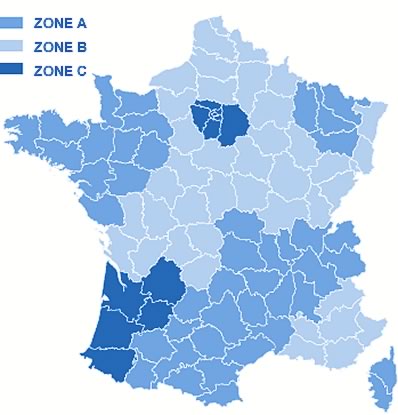
Welcome back! Here we go embarking on a new school year. During the holidays I decided to look up the holiday dates for next year. However, the French governments calendar wasn’t very clear so I decided to make an easy-to-understand calendar in English for you. This is the first place on the internet to have one! So here it is…  The school holidays in France depend on what zone you’re living in.

As you can see on the map, France is split into three zones. Zone A, Zone B and Zone C. Find your department on the map to see which zone it’s in and then look at the corresponding column of the table showing the holiday times below.

Zone A: Caen,  Clermont-Ferrand,  Grenoble,  Lyon,  Montpellier,  Nancy-Metz,  Nantes,  Rennes,  Toulouse.
Zone B: Aix-Marseille,  Amiens,  Besançon,  Dijon,  Lille,  Limoges,  Nice,  Orléans-Tours,  Poitiers,  Reims,  Rouen,  Strasbourg.
Zone C: Bordeaux,  Créteil,  Paris,  Versailles.

Holidays
Zone A
Zone B
Zone C
Back to school
Thurs 2 Sept 2010
Thurs 2 Sept 2010
Thurs 2 Sept 2010
All Saints
23 Oct – 4 Nov
23 Oct – 4 Nov
23 Oct – 4 Nov
Christmas
18 Dec ‘10 – 3 Jan ‘11
Winter Break
26 Feb – 14 Mar
19 Feb – 7 Mar
12 Feb – 28 Feb
Spring Break
23 Apr – 9 May
16 Apr – 2 May
9 Apr – 26 Apr
Summer Hols
2 Jul 2011
2 Jul 2011
2 Jul 2011
All holidays begin after classes and end on the mornings of the days indicated. Students who don’t have classes on Saturdays begin their holidays on Friday afternoon after class.

Click here to download a larger version
{Source: http://www.education.gouv.fr/} 

Article by The Editor

Sunday, August 1, 2010

Our guide to your rentrée kit

Dear Readers,

Yes, it’s time to go back to school and here is The Lycée Times guide to your rentrée needs. If you’re new to France this year or, indeed, new to the school system, then there are a few words and names of things you’re going to need to know. Here is that list.

For Maths, you may need:
  • compas (a compass)
  • règle plate 30 cm (a 30cm ruler)
  • équerre (a square/set square)
  • rapporteur (a protractor)
  • calculatrice (a calculator)

For French, you may need:
  • classeur (ring-bound folder)
  • un cahier de brouillon (a copy you can use for draft sheets)
  • intercalaires (dividers for your ring-bound folder)
  • pochettes transparents perforées (clear plastic pockets for ring-bound folders)
  • In Lycée, a notes copybook is recommended

For languages, you may need:
  • un carnet (a small copybook, usually used for vocabulary- Hardback recommended)
  • un cahier (a copybook)
  • un cahier grand format (A4 copybook)

Other things may include:
  • porte-vues (folder with clear plastic pockets attached)
  • feutres (marker pens)
  • crayons de couleur (colouring pencils)
  • crayon (pencil)
  • stylo encre/plume (fountain pen)
  • cartouches (ink cartridges for fountain pens)
  • gomme (eraser)
  • ciseaux (scissors)
  • colle (glue)
  • règle (ruler)
  • copies doubles (basically one bit of paper folded in two to make two A4 pages with squares – for writing)
  • copies simples (A4 pages with squares – for writing)
  • Kway (waterproof coat)

Hope this list helps you all,

Article by The Editor

Saturday, June 12, 2010

2010 drawn to an end

Dear Readers,

This year has had it all, heavy snow, an announcement of a Lycée reform and something every French school year has, strikes! And yes, due to these many factors, some teachers are expecting students of 2nde to come in until the 2nd July 2010 so that they can complete teaching the program. The program that will not be there next year (see article on the Lycée reform). I hope all the students among my readers got what they wanted for next year like I did, however, I know that some new-comers (that is to say those who have been in France for less than three years) find it hard and often it’s a good decision to repeat the year. But here’s a quick re-cap on this years conseils. And the results have been a bit Greek this year…

Firstly, it seems that in my Lycée, S is quite popular and also seems quite easy to gain access to! With 51 students going into 1ère S for the school year 2010-2011 compared to a mere 36 going through to L and only enough students going through to STG to make up one class. Eleven will repeat 2nde. This however brought a question to mind, how is it possible? With 1ère S apparently “the hardest year to get into”, how is it that some 50% of the students in 2nde could have made it through to S without much of a struggle? So I did some research and unveiled a surprising and remarkable story. One of the 2nde students made it through to 1ère S with an average of only 6 in Chemistry! This must make a mockery of the entire “only the good students make it through to S” theory which, to start with, I didn’t for one minute believe. Don’t be fooled. No BAC is better than another. They all just specialise in different domains. L is for those who are good at languages and literature, S for those good at science and maths. Normally ES and STG are chosen if you’re looking to work for the social services, council etc. Generally speaking, you don’t pick a job in a laboratory if you like literature. The aim of the BAC’s is just to get you through Lycée and out the other side with the best result as possible. That’s why if you’re not good at maths, you pick L.


In the collège things have been equally strange and normal at the same time. With the brevets coming up, some collègiens will be taking the last few weeks off (not the 3èmes of course!). The 6èmes are on their days out for some schools and primary schools normally have a school trip around this time. Some teachers seem to be changing schools next year due to moving house. This could be as a result of the credit crunch and their downsizing… or the opposite!

And last but not least, to close the year, I would like to take this opportunity to thank all of the readers for your great, outstanding support (and sometimes criticism, however I encourage the latter to take place through email and not on forums as some of you have been practising it). According to the blog’s visitor statistics, the number of readers in the last 30 days alone has shot up by 2500%! And you’re actually reading which means so much! With some people spending 30 minutes of their time reading the articles from our archives. This year is drawing to a close and since March, the number of readers rose from 0 to some 500 some of which are returning! In addition, it’s not just France that’s logging on, readers from all over the world have been using The Lycée Times, from countries such as Germany, Italy, The UK, Ireland and recently Russia! This blog would be nothing without you so thank you so much and remember to come back after the rentrée 2010!
 
The blog will not be updated during the summer holidays, but it will remain online and the next post will be at the rentrée. Happy holidays to all and I wish you all the best for the rentrée 2010. See you in September!

Best Wishes,
The Editor

_______________________________

Just a reminder that you can now find The Lycée Times on Google. Just search for The Lycée Times and it’s the third or fourth one down, with the title being simply, “The Lycée Times”.
Or, bookmark us by pressing Ctrl+D on your keyboard!

Saturday, May 29, 2010

The conseil de classe. Find out what the teachers DON’T tell you!

Dear Readers,

If this is your first year of experience of the French schooling system and you’re not brain-dead yet, I would personally like to congratulate you. Well done, you’ve done it! It’s the end of the year!
Yes, the end of the year is forever nearing closer as we move into June and this means that the teachers will be having a meeting called the “Conseil de classe” (Class council) which is made up of your year head, class tutor and principle. All of these, plus your other teachers from all of the subjects will have an input into the verdict at the end of the term on whether you’ll be going into next year or not. There are, however, some things worth knowing that the teachers don’t tell you!

1. They might try to make you repeat
This is something to be wary of. The teachers can have the tendency just to go ahead with this things, regardless of your results “because you’re a foreign student”. Cruel, but so very unfortunately true! You mustn’t fall for this straight away. There are a couple of things to take into account first. Firstly, you should not repeat the year if your moyenne generale is higher than 10. Especially in collège. There are (and this is a fact) French students who go through to the following year with moyennes of 10 and foreign students who get kept back even if they have the same result. They’ll try to make it sound as if it will be “hell on earth the next year” and “that you must repeat because you won’t be capable” but really, if your moyenne generale is higher than 10, get out the cotton-wool!

2. Retiring teachers can help!
Ok, ok, I know this sounds silly but you’ll need all the help you can get. All of your teachers get a form in the shape of a table. What they must do is tick the “Yes” or “No” box as to whether you go through to the following year. If they want you to go through then they’ll tick “Yes” and vice versa. Retiring teachers, if they’re nice, can help you out by giving you a “Yes”. This was my case a couple of years ago. The week before the conseil de classe, my teacher who was retiring that year, approached me after class and asked would I like to go through to the following year. I said yes and she said that she would support that decision and try to make it like her “final act” in her schooling life, to get me what I wanted. But you have to have been well behaved during the year… That could help more!

3. Things to bear in mind before you go running off to repeat
Bear in mind that if you are in 2nde this year and you’re thinking about repeating, that there is the réforme du lycée next year. This means that you won’t be doing exactly the same things you did this year and you may not even have the same books! No-one knows! Even the teachers!

4. What the teachers never mention
The teachers will try to make you repeat and they will say that it will be too hard. Don't fall for it! In an interview with a French teacher, she said casually, that "we repeat all foreign students once they get to 3ème before going onto 2nde". So it's a cycle that they have in place and you should know by now what the French are like with their Administration departments etc.

I hope this advice has been helpful. I understand some of this may seem a little racist towards the French on my part, but I’m not. My best friend is French. It’s just the truth! Please leave your questions (and/or criticism!)  in the comments box below. You don’t need an account and you don’t need to log in. Just click on the text saying the number of comments, write your comment and press “Post Comment”.

Article by The Editor

Saturday, May 22, 2010

The Reform of the Lycée system in 2010

Dear Readers,

As you may already know, French President Nicolas Sarkozy is proposing a reform of the lycée system for September 2010. This reform will affect all classes of the lycée especially those wishing to do a BAC 'L'. The changes aren't going to be very radical and this reform is for the best. I've done my research and I'm here now to tell you about it!

Firstly, France's education system is a mess in the current state it's in. A report was written on the French education system during the drawing-board stages of the reform. The report explains that French primary school children attend school a mere 140 days a year, which articles in the press compare with 180 days in Finland or 200 in Italy. Yet  French primary school children actually spend more hours in school that any other country in the EU or the OECD, 913 hours a year compared with 634 in Germany. It's certainly an alarming fact  that, despite all those hours spent in the classroom and the 21% of the GNP thrown into the educational black hole, French schoolchildren's results are still not satisfactory. That's why the "Education Nationale"  is more than a little fretful as it awaits the publication of the latest PISA (Programme for International Student Assessment) results, due out in December this year. France is not expected to rank among the highest of the 65 countries assessed. This is because statistics already show that nearly 15% of children are neither literate nor numerate when they start secondary school and 40% have an insufficient grasp of primary programme core subjects.  With this in mind, it's hardly surprising that  the situation  in secondary school is worrying too.  The report points out that with 150,000 young people leaving school every year with no qualifications whatsoever, we can expect an additional three million unqualified individuals on the job market in twenty years' time.  Added to a current annual shortfall of 100,000 qualified people, the country is in fact facing an educational time bomb with potentially huge social and economic repercussions. Sarkozy's announcement follows the recommendations of Richard Descoings: rehabilitate the L track (with an emphasis on "language" rather than "literature"), more guidance for students, more flexibility of choice, including midterm changes.

The only disruption caused by this reform will probably only be that we won't be able to sell our old schoolbooks come the end of the year and that the schoolbooks for 1ère and some Terminale subjects will be more expensive seeing as they'll have to be bought new. On the other hand, that may not be the case if Sarkozy is planning on just increasing the weekly hours of certain subjects. Students repeating the year could find it harder seeing as they won't be going over all of the same things that they did this year.


Article by The Editor
With thanks to "The Mammoth and Me" Blog